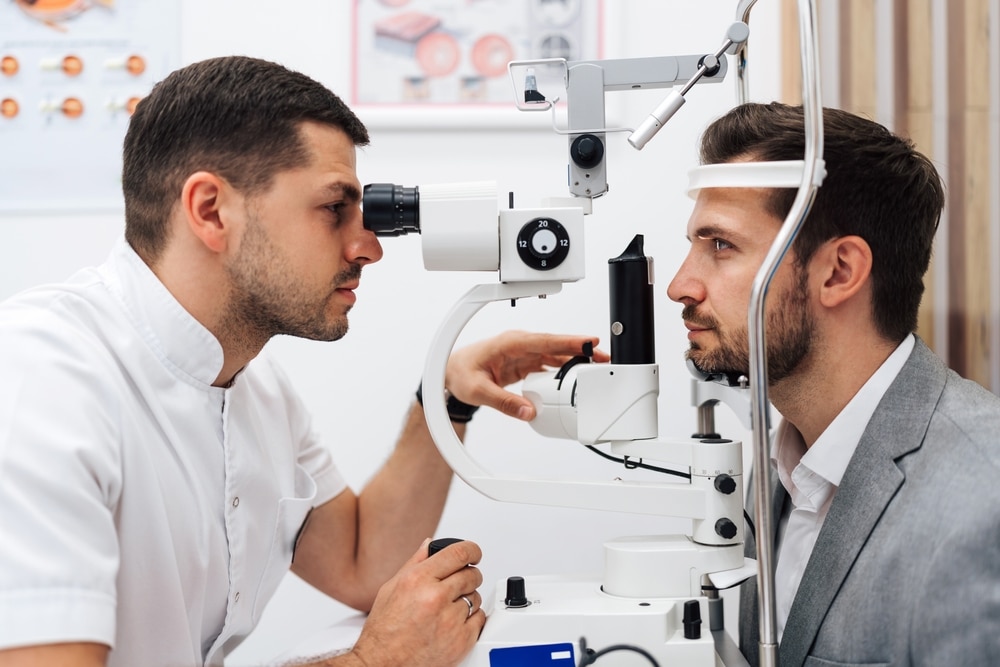
Your eyesight is one of your most valuable assets, yet diabetes can put it at risk without causing noticeable symptoms right away. One of the most common diabetes-related eye conditions is diabetic retinopathy, and understanding its warning signs and the importance of early detection can help protect your vision for years to come.
At Cornerstone Eye Associates in Dallas and Richardson, TX, we help individuals detect and manage diabetic eye conditions before they threaten vision. Dr. Claire Y. Chu is a board-certified ophthalmologist dedicated to helping people protect their eyesight through comprehensive eye care and early disease detection.
What Is Diabetic Retinopathy?
Diabetic retinopathy is a diabetes-related eye condition that occurs when high blood sugar damages the tiny blood vessels in the retina, the light-sensitive tissue at the back of the eye. The condition typically progresses through two stages:
- Nonproliferative Diabetic Retinopathy (NPDR): In which weakened blood vessels may leak fluid or blood.
- Proliferative Diabetic Retinopathy (PDR): The advanced stage, when abnormal blood vessels grow in the retina and increase the risk of vision loss.
What Symptoms Should You Watch For?
In the early stages, diabetic retinopathy may not cause noticeable symptoms. As the condition progresses, you may experience:
- Blurry or fluctuating vision
- Dark spots or floaters
- Difficulty seeing at night
- Areas of missing vision
- Reduced color perception
- Sudden vision changes
How Can You Protect Your Vision?
Diabetic retinopathy can often be managed successfully when it is detected early. Common treatment options include:
- Blood Sugar Control: Managing blood sugar, blood pressure, and cholesterol can help slow disease progression.
- Medications: Anti-VEGF injections can reduce retinal swelling and abnormal blood vessel growth.
- Laser Therapy: Laser treatment can seal leaking blood vessels and help preserve vision.
- Surgery: Advanced cases may require a vitrectomy to remove blood or scar tissue from the eye.
Dr. Chu works closely with each individual and her care team to support the best possible vision outcomes.
When Should You Schedule an Eye Exam?
Even if your vision seems normal, diabetes can still affect your eyes. Regular eye examinations can identify diabetic retinopathy before symptoms develop and help preserve your long-term vision.
At Cornerstone Eye Associates, we provide comprehensive diabetic eye care for individuals throughout Dallas and Richardson, TX. If you have diabetes or have noticed changes in your vision, call 972-803-5665 to schedule an appointment and learn how we can help protect your eyesight.